
Dementia Action Week: Memory Changes and When to See a GP
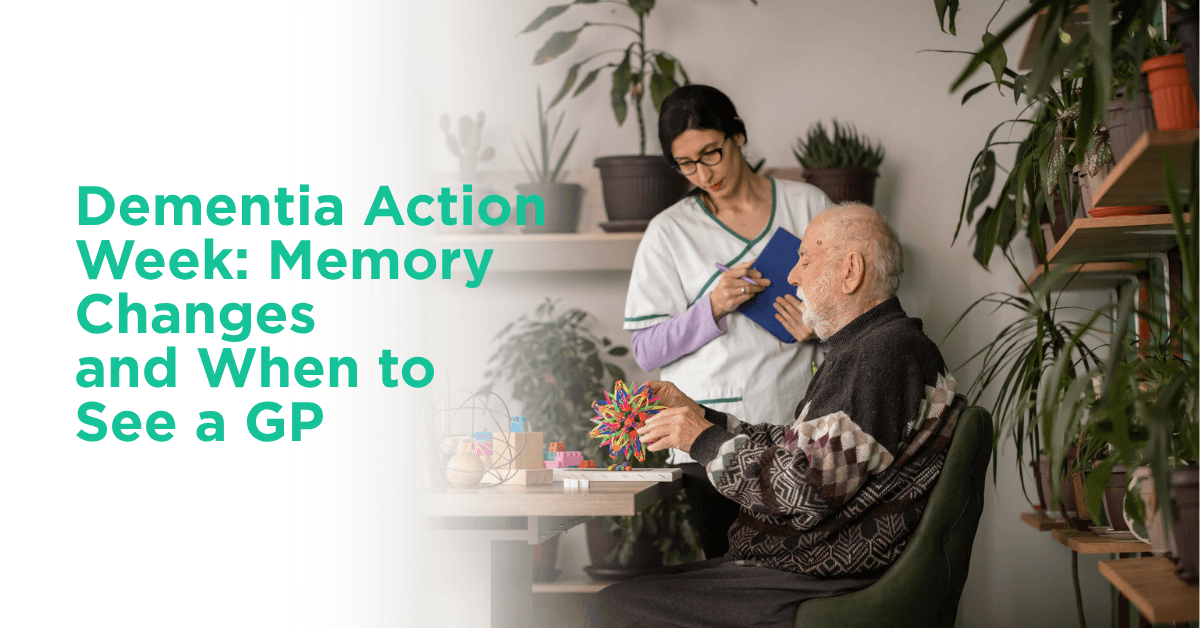
Forgetting where you left your keys or taking a little longer to remember someone’s name can happen from time to time, particularly as we get older. But when memory, thinking or behaviour begins changing noticeably or interfering with everyday life, it is worth discussing with a healthcare professional.
Memory changes do not automatically mean dementia. Depression, sleep problems, medicines, vitamin deficiencies, infections, alcohol use, and several other health conditions can also affect memory and thinking.
Dementia Action Week is an opportunity to increase awareness of dementia and encourage conversations about brain health, memory changes, and support.
If you have memory concerns in Lismore, either for yourself or someone close to you, a GP can be a useful first point of contact.
Is Some Forgetfulness a Normal Part of Ageing?
Some changes in memory can occur with normal ageing.
You might occasionally:
- Forget where you put something
- Take longer to recall a person’s name
- Walk into a room and briefly forget why
- Need more time to learn something new
- Forget an appointment but remember it later
These occasional lapses do not necessarily indicate dementia, particularly if they are not becoming progressively worse or interfering with your ability to function independently.
Healthdirect explains that some memory changes can occur with normal ageing, but major changes in memory are not considered normal at any age.
The important question is often not simply, “Am I forgetting things?” but rather, “Are these changes becoming more frequent or affecting my everyday life?”
What Is Dementia?
Dementia is not a specific disease.
It is a broad term used to describe a group of conditions that gradually affect brain function, including memory, thinking, behaviour and the ability to complete everyday activities.
There are several types of dementia. Alzheimer’s disease is the most common, while other forms include vascular dementia, Lewy body dementia and frontotemporal dementia.
Although dementia is more common among older adults, it is not an inevitable part of ageing.
Younger onset dementia can also occur in people under 65 years of age.
What Are Some Early Signs of Dementia?
The early signs of dementia can be subtle and vary considerably between people.
Memory loss is one possible symptom, but dementia can affect much more than memory.
Changes worth discussing with a doctor may include:
- Forgetting recent events or conversations repeatedly
- Asking the same question multiple times
- Becoming confused about dates or places
- Getting lost in familiar locations
- Difficulty following conversations
- Difficulty finding familiar words
- Problems planning or solving everyday problems
- Difficulty completing familiar tasks
- Frequently misplacing items in unusual locations
- Changes in judgement
- Changes in mood, behaviour or personality
- Withdrawing from usual activities
Dementia Australia notes that someone close to the person may sometimes notice these changes before the individual recognises them themselves.
What’s the Difference Between Normal Forgetfulness and a Concerning Memory Change?
The distinction is not always clear, which is why professional assessment can be helpful.
For example:
Occasional forgetfulness: You temporarily forget where you left your keys but eventually find them.
Potentially concerning change: You repeatedly place everyday objects in unusual locations and cannot retrace your steps to find them.
Occasional forgetfulness: You briefly forget someone’s name but remember it later.
Potentially concerning change: You regularly forget the names of close family members or familiar people.
Occasional forgetfulness: You need to check the date.
Potentially concerning change: You frequently become confused about the month, year, or where you are.
The key considerations are whether the changes are persistent, progressing, and interfering with everyday functioning.
Does Memory Loss Always Mean Dementia?
No.
There are many possible causes of memory problems, and some may be treatable or reversible.
Possible contributors include:
- Depression
- Anxiety
- Poor sleep or insomnia
- Medication side effects
- Alcohol or drug use
- Vitamin deficiencies
- Thyroid problems
- Infections
- Head injury
- Epilepsy
- Other neurological conditions
Healthdirect specifically notes that depression and head injuries are among the conditions that can cause memory difficulties.
This is an important reason not to self-diagnose dementia based on forgetfulness alone.
A GP can investigate possible explanations and determine whether further assessment is appropriate.
Can Depression or Anxiety Affect Memory?
Yes.
Mental health can affect concentration, attention, and the ability to process or remember information.
Someone experiencing depression, anxiety or significant stress may notice:
- Difficulty concentrating
- Forgetfulness
- Slower thinking
- Reduced motivation
- Difficulty making decisions
These symptoms can sometimes resemble cognitive decline.
During a dementia assessment in Lismore, your GP may therefore ask about mood, sleep and emotional wellbeing as well as memory.
Can Medicines Affect Memory?
Some medicines can contribute to confusion, drowsiness or cognitive changes, particularly in older adults or people taking multiple medicines.
This is why medication review can form part of an assessment for memory concerns.
Bring an up-to-date list of:
- Prescription medicines
- Over-the-counter medicines
- Vitamins
- Herbal products
- Other supplements
Do not stop prescribed medicine because you think it is affecting your memory without discussing it with your doctor first.
When Should You See a GP About Memory Loss?
Consider seeing a GP for memory loss if you or someone close to you notices changes that:
- Are becoming more frequent
- Are progressively worsening
- Affect everyday tasks
- Cause confusion in familiar places
- Affect conversations or communication
- Make managing medicines or finances difficult
- Affect work or usual responsibilities
- Are accompanied by noticeable mood or personality changes
- Raise concerns about safety
Healthdirect recommends seeing a doctor when memory problems begin affecting daily life and advises having changes assessed as soon as a problem is noticed.
You do not need to wait until memory problems become severe.
What Happens During a Memory Assessment?
There is no single test that can diagnose dementia.
Instead, a doctor builds a picture using your symptoms, medical history, physical examination, and, where appropriate, further testing.
Your GP may ask:
- When the changes first started
- Whether they are getting worse
- Which types of memory or thinking problems you have noticed
- How they affect everyday activities
- About your medical history
- About your family medical history
- Which medicines you take
- About alcohol and smoking
- About sleep
- About your mood and emotional wellbeing
Your doctor may also perform a physical or neurological examination.
What Is a Cognitive Assessment?
A cognitive assessment looks at different aspects of thinking rather than memory alone.
Depending on the test used, it may assess:
- Memory
- Concentration
- Language
- Problem-solving
- Counting
- Orientation
- Spatial awareness
A commonly used brief assessment is the Mini-Mental State Examination (MMSE), although other cognitive assessment tools may also be used depending on the individual and clinical circumstances.
A cognitive screening result does not necessarily provide a diagnosis by itself.
It forms one part of a broader medical assessment.
Will You Need Blood Tests?
Possibly.
Blood and sometimes urine tests may be used to look for other conditions that could contribute to memory or cognitive symptoms.
Healthdirect notes that testing may assess for problems such as:
- Infection
- Anaemia
- Electrolyte imbalance
- Kidney problems
- Liver problems
- Thyroid problems
- Vitamin deficiencies
Identifying another cause can be important because treatment will depend on what is contributing to the symptoms.
Will You Need a Brain Scan?
Not everyone experiencing forgetfulness automatically needs a brain scan.
Depending on the symptoms and findings from the initial assessment, a doctor may recommend imaging such as:
- CT scan
- MRI scan
- Other specialised imaging in selected circumstances
Brain imaging may help rule out other conditions, such as stroke, a tumour or hydrocephalus, and may contribute to the diagnosis of certain types of dementia.
Your GP or specialist can determine whether imaging is appropriate.
Should You Bring Someone to the Appointment?
It can be helpful.
If you are comfortable doing so, consider bringing a partner, family member, close friend or carer who knows you well.
They may have noticed changes that you have not recognised or may be able to provide examples of how your memory or behaviour has changed.
Dementia Australia recommends bringing a trusted person, a list of the changes you have noticed and a list of your medicines when attending a doctor about memory concerns.
How Should You Prepare for the Appointment?
Before seeing a memory loss doctor in Lismore, write down examples of the changes that concern you.
Useful information can include:
- When you first noticed the problem
- How frequently it happens
- Whether it is becoming worse
- Examples of everyday tasks that have become difficult
- Recent illnesses or injuries
- Changes in mood or behaviour
- Sleep problems
- Current medicines and supplements
- Family medical history
Specific examples can help your doctor understand what has changed and whether further investigation is needed.
What Happens If Further Assessment Is Needed?
Depending on the initial assessment, your GP may refer you to another healthcare professional.
This might include a:
- Geriatrician
- Neurologist
- Psychiatrist
- Neuropsychologist
- Memory or cognitive assessment service
Further assessment may involve more detailed cognitive testing, neurological examination, or imaging.
Diagnosis can take time because doctors may need to exclude other potential causes and observe how symptoms change.
Why Can Early Assessment Be Helpful?
Seeking assessment does not mean assuming the worst.
There may be another explanation for the changes, including a potentially treatable health condition.
If dementia is diagnosed, earlier assessment can also provide more time to:
- Understand the condition
- Discuss treatment and symptom management
- Access appropriate support
- Make decisions about future healthcare
- Consider practical and financial planning
- Discuss driving and other safety considerations
- Involve family or carers where appropriate
Healthdirect notes that an earlier diagnosis can give people more choice about planning what happens next.
What If a Family Member Doesn’t Want to See a Doctor?
Memory changes can be difficult to discuss.
Someone may feel frightened, embarrassed or believe nothing has changed.
Rather than immediately telling them you think they have dementia, it may be more helpful to focus on specific changes you have noticed.
For example, you might mention that they seem to be having more difficulty remembering appointments or managing a familiar task and suggest having a general health check.
If you are unsure how to approach the conversation, the National Dementia Helpline can provide information and support.
Where Can People Find Dementia Support?
Dementia Australia provides information and support for people living with dementia, their families and carers.
The National Dementia Helpline is available on 1800 100 500.
Support can be useful even before a diagnosis if you are worried about memory or cognitive changes.
A GP can also help identify appropriate local or specialist services based on individual needs.
When Are Memory or Confusion Changes an Emergency?
Gradual memory changes are different from sudden confusion.
A sudden change in someone’s thinking, alertness or behaviour may indicate a medical emergency or acute illness rather than dementia.
Seek urgent medical attention for sudden confusion, particularly if it occurs with:
- Facial drooping
- Weakness or numbness on one side
- Difficulty speaking
- Severe headache
- Loss of consciousness
- Recent head injury
- Severe illness
Sudden neurological symptoms can be associated with conditions such as stroke and require urgent assessment.
For a medical emergency, call Triple Zero (000).
Frequently Asked Questions
Is memory loss always a sign of dementia?
No. Memory difficulties can have many causes, including depression, sleep problems, medicines, vitamin deficiencies, alcohol use, and other medical conditions. A GP can help investigate the cause.
What are some early signs of dementia?
Possible signs include increasing memory loss, repeating questions, difficulty completing familiar tasks, confusion about time or place, problems with language, changes in judgement, and changes in mood or personality.
When should I see a GP about memory problems?
Consider seeing a GP when memory or thinking changes are persistent, worsening or interfering with everyday life. You can also seek assessment whenever you or someone close to you is concerned.
Is there one test for dementia?
No. There is no single definitive test for dementia. Assessment may include medical history, physical and neurological examinations, cognitive testing, pathology tests, and sometimes brain imaging.
Can younger people develop dementia?
Yes. Dementia is more common in older people, but younger onset dementia can affect people under 65 years of age.
Can a GP arrange a dementia assessment in Lismore?
A GP can perform an initial assessment of memory and thinking concerns and arrange appropriate tests. If further assessment is required, they may refer you to a specialist or cognitive assessment service.
The Bottom Line
Dementia Action Week is an opportunity to talk openly about memory, thinking and brain health and to recognise that seeking help for a change does not automatically mean receiving a dementia diagnosis.
Occasional forgetfulness can occur with ageing. However, memory loss that becomes more frequent, progressively worsens or begins interfering with familiar tasks. Communication, decision-making, or everyday independence deserves medical assessment.
There are also many conditions other than dementia that can affect memory, including sleep problems, depression, medicines, and some physical health conditions.
If you have memory concerns in Lismore, consider booking an appointment with a GP at Lismore Doctors. Your GP can review the changes you have noticed, assess possible causes, and determine whether a cognitive assessment, further testing or specialist referral may be appropriate.
References
- Healthdirect Australia – Worried About Your Memory?
- Healthdirect Australia – Tests Used in Diagnosing Dementia
- Healthdirect Australia – Dementia Overview
- Dementia Australia – Early Warning Signs of Dementia
- Dementia Australia – Dementia Testing and Diagnosis
- Healthdirect Australia – Younger Onset Dementia